What is it?
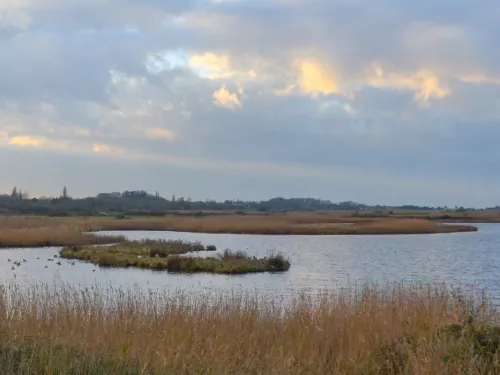
Reedbeds are dominated by common reed, almost to the exclusion of other species. Reeds have modified stems that run horizontally underground and grow multiple, densely spaced upright shoots each year. These usually reach about two metres in height and remain standing the following year, helping to aerate the submerged roots. Reeds grow fast, particularly in fertile waters, and can take over rapidly.
Reedbeds can support a wide range of wildlife, provided a variety of ages and structures are present. Bitterns prefer wet reedbeds and feed at the water’s edge where fish are more plentiful, and so favour sites with plenty of pools and ditches. Damp areas support the greatest number of invertebrate species. The drier areas may provide burrowing habitat for water voles and islands may be used by otters.
Why is it like this?
Common reed readily colonises open water and, because of its ability to withstand submerged conditions, can remain dominant provided it is regularly flooded. New reedbeds can be established in suitable areas through planting. Over time reedbeds can gradually dry out through the build-up of litter, and develop into lowland fen and eventually wet woodland. Traditionally, the bare stems were harvested in winter to be used for thatch, and this helped to set back the development of fen and maintain single-species stands of reeds.
Distribution in the UK
Widespread throughout the lowlands.
What to look for
Bittern is the iconic species of reedbeds. In dense vegetation, sound is the best means of communication – listen out for booming males in spring or search the reedy edges of pools for the chance of seeing one. Listen out also for distinctive song of the Cetti’s warbler, exploding over the scratchier calls of reed and sedge warblers and the pig-like squeals of secretive water rails. After near-extinction in the 1970s, marsh harriers are once again a regular sight over reedbeds, particularly in the spring and summer. In winter, huge flocks of starlings can use reedbeds to roost, forming astonishing swirling patterns in the sky during the hour or so before dusk. Swallows and martins also use reedbeds to roost. In Norfolk and the Somerset Levels, listen out for the bugling of common cranes, which are currently increasing in the UK, partly due to reintroductions. An abundance of scarce moths are another feature of reedbeds – these are most easily seen at organised events.
Conservation
Large-scale drainage schemes meant that extensive areas of reedbed were converted to agricultural land from the 17th century onwards. The decline of reed-cutting during the 20th century, combined with pollution from agricultural run-off, has affected the quality of existing sites. There are about 900 reedbeds in the UK, but of these only 50 are big enough to support bitterns.
On the coast, it is likely that reedbeds will be lost due to sea-level rise as a consequence of climate change and efforts have been focussed on creating reedbeds at inland sites to compensate for this. The management of existing reedbeds has been reinvigorated in recent years. This includes the development of new markets for biofuel and compost and support for the reed-cutting industry.