
Herb-robert
Herb-robert is a low-growing plant, with small, pretty, pink flowers. Look for it in shady spots in woodland, hedgerows and coastal areas.
Want to learn more about wildlife near you? You're in the right place, search below and discover the nature you can help protect in Kent.
Herb-robert is a low-growing plant, with small, pretty, pink flowers. Look for it in shady spots in woodland, hedgerows and coastal areas.
If you spot a crawling shell next time you're at the seaside, take a closer look… it might be a hermit crab!
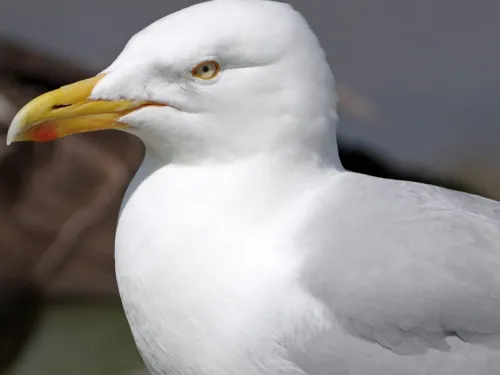
The herring gull is the typical 'seagull' of our seaside resorts, though our coastal populations have declined in recent decades.
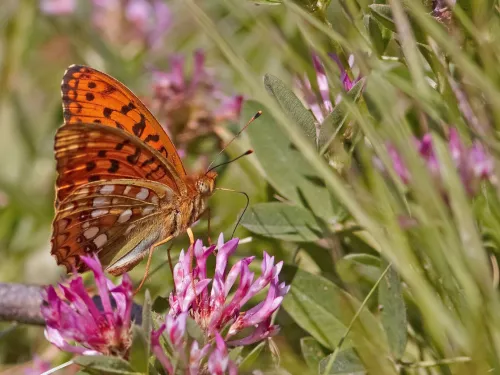
Considered Britain's most threatened butterfly, the high brown fritillary can be only be found in a few areas of England and Wales.
As its name suggests, Himalayan balsam is from the Himalayas and was introduced here in 1839. It now an invasive weed of riverbanks and ditches, where it prevents native species from growing.
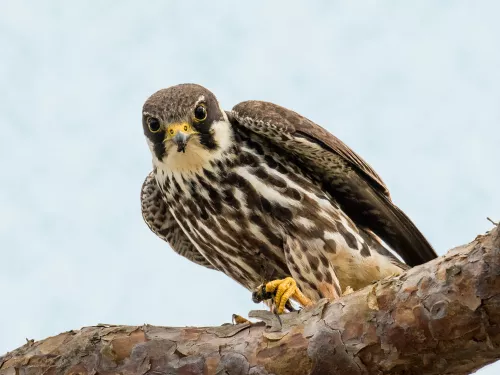
Look out for the swift-like shape of the hobby as it darts over heathlands and wetlands in summer. They are keen hunters, chasing and catching fast-flying dragonflies and small birds on the wing.
Hogweed can be found along hedgerows and roadside verges, and on waste ground and rough grassland. It displays umbrella-like clusters of creamy-white flowers. It's native, unlike its relative, Giant Hogweed.
Holly is a much-loved evergreen tree - its shiny, spiky leaves and bright red berries being a favourite in Christmas decorations. Found in all kinds of habitats, it provides an important winter food source for birds.
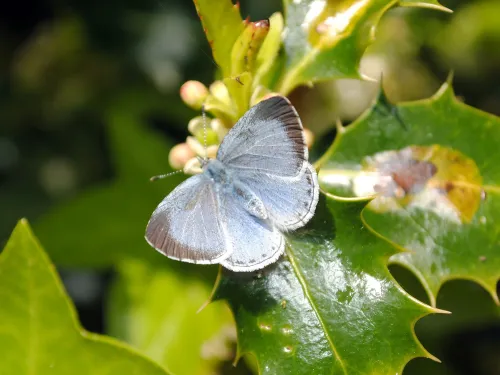
Look out for the small Holly Blue in your garden or local park. It is the first blue butterfly to emerge in spring, and a second generation appears in summer. The caterpillars are fond of holly and ivy.
The Holm oak is an introduced species that has been widely planted near the coast and in parkland. It is self-seeding in the south of the UK. Its young leaves are spiny like Holly leaves, and it produces acorns.
The papery, translucent, silver 'coins' of Honesty are instantly recognisable. They are actually the leftover seed pods that dangle from the plant through winter.
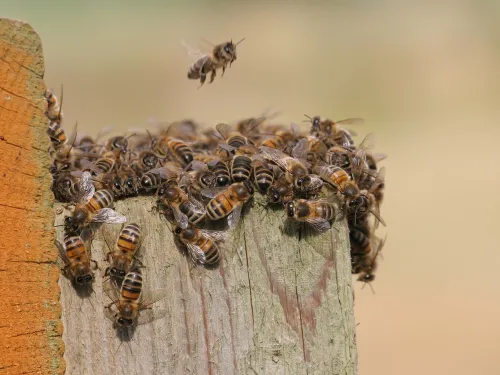
Honeybees are famous for the honey they produce! These easily recognisable little bees are hard workers, living in large hives made of wax honeycombs.