
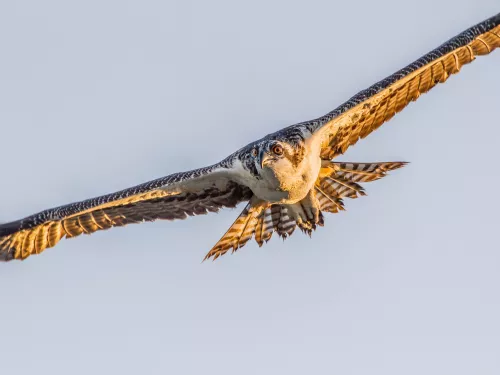
Osprey
A great way to get up close and personal with the magnificent osprey is via one of the many nestcams set-up in the places that it breeds: Scotland, Cumbria, Wales and the East Midlands.

Enormous flocks of geese, ducks and swans swirl down from wide skies to drop onto the flat, open expanses of flooded grazing marshes in winter. In spring, lapwing tumble overhead and the soft, damp ground speckled with cuckooflowers provides excellent habitat for waders probing for prey in the damp soil. By summer, when the ground is drier, some marshes are cut for hay or silage, but the ditches remain wet and come alive with dragonflies and other insects.
Coastal and floodplain grazing marsh is found on low-lying coasts and along slow-flowing rivers and estuaries. Some 500 plants have been recorded from the most diverse grazing marshes, but these comprise just 5% of grazing marshes – most have been agriculturally ‘improved’ and are of limited botanical interest. Perennial rye-grass, Yorkshire fog and rushes tend to dominate the sward, enlivened by damper patches of floating sweet-grass, creeping bent and silverweed. However, freshwater or brackish ditches (created for drainage purposes) and the remains of old creek systems where farmed land has been created on former saltmarsh can support interesting plants and good populations of invertebrates, including those such as dragonflies and damselflies that have both aquatic and terrestrial stages. Tussocky (areas where grass is longer and thicker) and damp swards provide good habitat for foraging and breeding waders, and shallow flooding creates ideal conditions for wildfowl during the winter.
Coastal and floodplain grazing marsh is defined by proximity to water, topography and management rather than the underlying substrate or the vegetation. Coastal grazing marsh was generally ‘reclaimed’ from salt marsh through embankment and drainage, a process that started in the medieval period – the lines of old saltmarsh creeks are still sometimes evident. Floodplain grazing marsh has similarly generally been embanked, drained and agriculturally improved, however, in some cases, grazing marshes were created on better drained floodplains through the use of sluices and ditches, plenty of grass and field boundaries for grazing livestock. In East Anglia in particular, grazing marshes resulted from the creation of ‘washlands’. A by-product of fenland drainage, washlands were used for flood water storage.
Most grazing marshes are used for pasturing cattle; some are cut for hay or silage. In the winter, extensive but shallow (less than 50cm) flooding can bring huge numbers of wildfowl to some sites, especially where varied conditions provide opportunities for diving, dabbling and grazing species. As floodwaters recede, invertebrates are pushed towards the surface if the water table remains high (within 20cm of the surface), providing prey for waders.
There are probably around 200,000 ha on low-lying coasts, the lower reaches of rivers and along estuaries throughout the UK, but the full extent is not currently known.
On larger sites, spectacular flocks of waterfowl can be seen and may include Bewick’s swan, whooper swan, brent goose, wigeon and golden plover. In the spring, look for waders, particularly lapwing and redshank, snipe on sites with peat soils, and more rarely, curlew and black-tailed godwit. Many of these species have declined over the last 50 years and in many places are mostly confined to nature reserves where the management is carefully targeted to create the right conditions for their needs. The high density of prey at some of these sites can attract marsh harrier and peregrine. At known sites on the east coast and in the Somerset Levels and Moors, listen out for trumpeting cranes.
In the summer, grazing marshes are good places to brush up on dragonflies and damselflies – look for scarce chaser, scarce emerald, variable damselfly, Norfolk hawker and hairy dragonfly.
Deep drainage and the introduction of electric pumps to replace the less efficient diesel engines (which themselves replaced wind power) has allowed year-round drainage and conversion to cereals, resulting in the loss of much of the UK’s grazing marsh over the last century. Remaining marshes have often become too dry and subject to heavy grazing or early cutting regimes that are not compatible with populations of breeding waders, which are experiencing serious declines. Some areas of grazing marsh may change in character through the restoration of naturalised floodplains and as sea-defences are realigned.
A great way to get up close and personal with the magnificent osprey is via one of the many nestcams set-up in the places that it breeds: Scotland, Cumbria, Wales and the East Midlands.
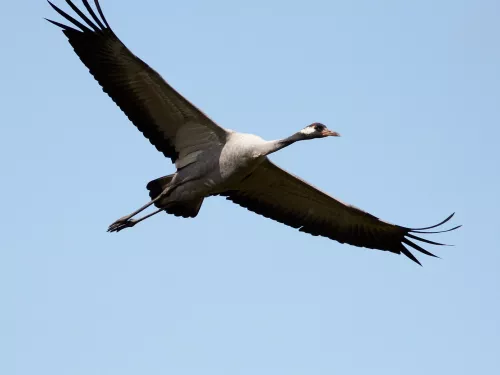
As the UK’s tallest bird the common crane is instantly recognisable with the ruffle of tail feathers and very long legs. Their bugling call is also very distinctive.
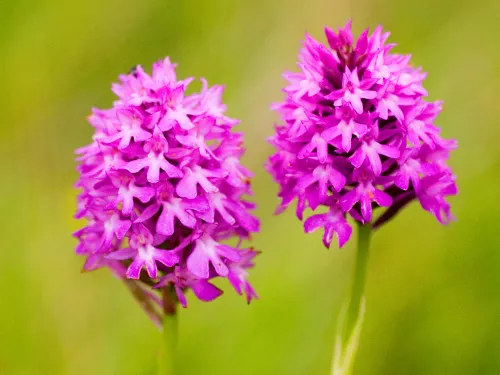
The Pyramidal orchid lives up to its name - look for a bright pinky-purple, densely packed pyramid of flowers atop a green stem. It likes chalk grassland, sand dunes, roadside verges and quarries.
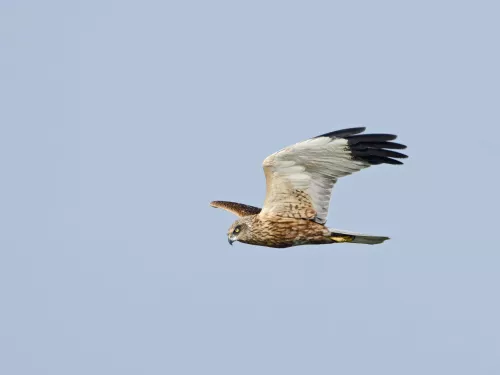
The courtship of the marsh harrier is certainly a sight to behold - wheeling and tumbling through the sky, male and female partners lock talons in mid-air. Look out for this rare bird over reedbeds in East Anglia, Somerset and the South East.
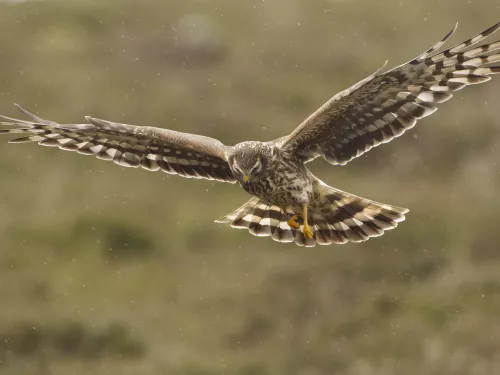
The hen harrier has been severely persecuted for taking game species and has suffered massive declines in numbers as a result. Thankfully, conservation projects are underway to reduce conflict surrounding its controversial prey.

Our most diminutive falcon, the merlin is a pretty bird of prey. It chases small birds, flying low to the ground or hovering in the breeze because of its small size. Resident merlins are joined in winter by Icelandic migrants.

The short-eared owl, or 'Shortie', is an unusual owl because it prefers to be out and about in the daytime. Learn more about it in our species information page.
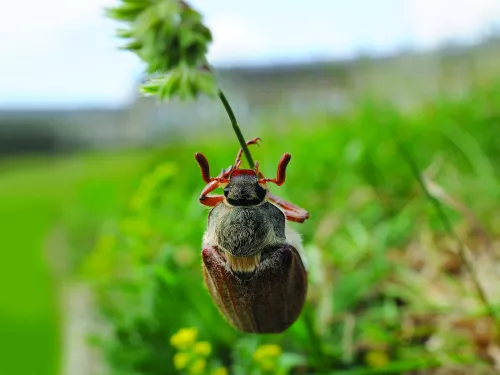
This large, brown beetle can be seen swarming around streetlights in spring. They live underground as larvae for years and emerge as adults often in large numbers. Listen for their characteristic buzzing sound.
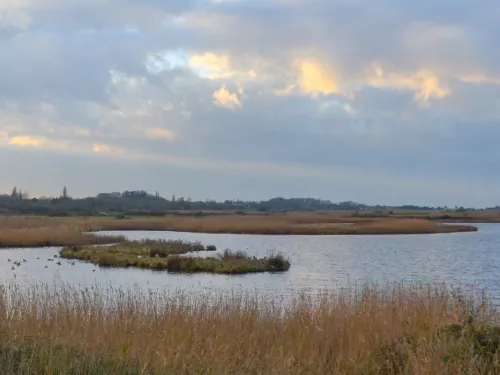
Oare Marshes is an international importance for migratory, overwintering and breeding wetland birds, the reserve consists of grazing marsh (one of a few left in Kent).
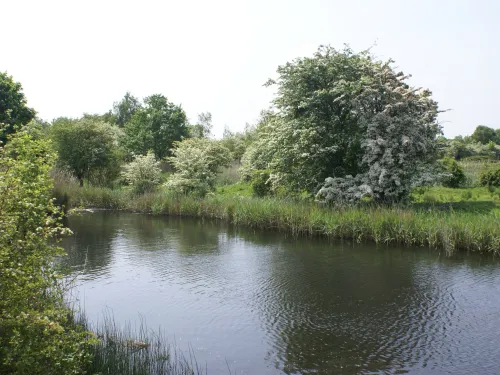
Lying along the edge of the river Medway, this patchwork of wet fields and scrub is criss-crossed by ditches and home to many rare and unusual plants and animals.