
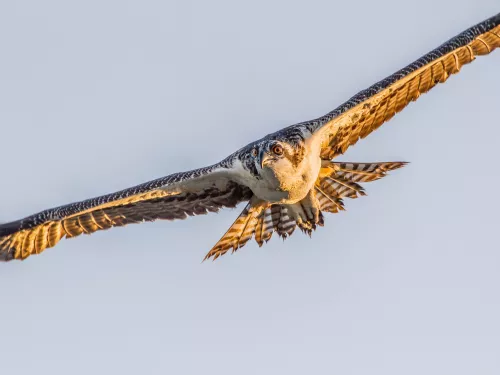
Osprey
A great way to get up close and personal with the magnificent osprey is via one of the many nestcams set-up in the places that it breeds: Scotland, Cumbria, Wales and the East Midlands.

Lakes come in many forms: some are splendid and clear, while others are more reminiscent of a murky swamp. Each lake is strongly influenced by the underlying lakebed and the surrounding landscape, and collectively, lakes support a huge variety of animal and plant life.
Broadly, a lake is a very slow moving body of water surrounded by land. There are many open standing water types, ranging from the impressively large and deep nutrient-poor and acidic lakes of the uplands to the shallow, often artificial, nutrient-rich lakes found in the lowlands.
The clear waters and rocky bottoms of upland lakes (called lochs in Scotland and loughs in Ireland) support a characteristic group of shoreline plants that have distinctive rosettes of narrow leaves (known as isoetids). In contrast, pools found in blanket bog contain peat-stained waters that are deep brown and highly acidic – conditions suitable only for a few bog species such as cottongrasses, bogbean and bladderworts.
In the lowlands, the highly fertile lake waters are usually clouded with abundant planktonic algae, which form the basis of a food-web of invertebrates, fish (such as roach, rudd, carp and tench) and fish-eating birds like the great-crested grebe. The best sites are home to a rich variety of aquatic plants and can support ducks such as shoveler and gadwall. Unfortunately, nutrient levels are artificially high in many lowland lakes, and the agricultural fertiliser run-off from surrounding farmland or sewage effluent causes algae to bloom, forming a dense layer that limits other plant and animal life in the lake.
There are, of course, other lake types that do not fit neatly into the spectrum between these main two:
The varying nature of lakes and pools is a consequence of the underlying geology and human activity, both of which also influence nutrient levels. Upland lakes and tarns (small mountain lakes) and lochans (small inland lochs) were generally formed after glaciers scoured out basins in the hard, rocky upland landscape, or deposited barriers of material at the head of valleys that retained water. The waters are generally clear because the low nutrient availability limits the growth of microscopic algae.
In contrast, nutrient-rich lakes are mostly artificial, having been created through gravel extraction or as ornamental lakes. The Norfolk and Suffolk Broads are an unusual example of this, having been created by medieval peat-digging. There are however some natural nutrient-rich lakes, including Upper Loch Erne in Fermanagh, the result of glacial action in a limestone landscape, and lochs associated with machair grassland in the Western Isles.
Turloughs and fluctuating meres are shallow lakes and are something of a special case. Turloughs, are found in limestone country where the permeable rock allows water to well up, flooding the low-lying rock, and then to drain away again. The origins of fluctuating meres are more of an enigma, but they show a time-lag in their response to changes in the water table, so that they can empty in winter and re-fill in summer but may also stay empty or full for several seasons. Because turloughs and fluctuating meres have no inlets, they do not silt up as other shallow lakes do, and some may be very ancient.
Lakes are widespread in the uplands, but more scattered in the lowlands. There are three turloughs in Northern Ireland and 12 fluctuating meres, smaller fluctuating pools, in Breckland (this habitat is confined to Britain and Ireland).
Watch for traces of water voles and otters, and if you’re lucky, a glimpse of one. On the shores of upland lakes look for a suite of curious-looking plants including shoreweed, water lobelia and awlwort. In the summer goosander may be present, with black-throated and red-throated divers and goldeneye on some Scottish lochs. Visit nutrient-rich lakes in winter for wildfowl including teal and diving ducks such as tufted and pochard. In summer, spot dragonflies and the specialist aquatic plants, although these can be hard to see.
The number of nutrient-poor lakes has remained stable, although some have been degraded by agricultural run-off. Nutrient-rich lakes have suffered more from pollution – successful restoration work at some has focussed on stripping phosphates from sewage and removing nutrient-enriched sediment. The management of waterbodies needs to include their surroundings, as these often form part of the catchment and also play an integral part in the life-cycle of many aquatic species that spend part of their time or some life stages on dry land (e.g. amphibians and some invertebrates).
A great way to get up close and personal with the magnificent osprey is via one of the many nestcams set-up in the places that it breeds: Scotland, Cumbria, Wales and the East Midlands.
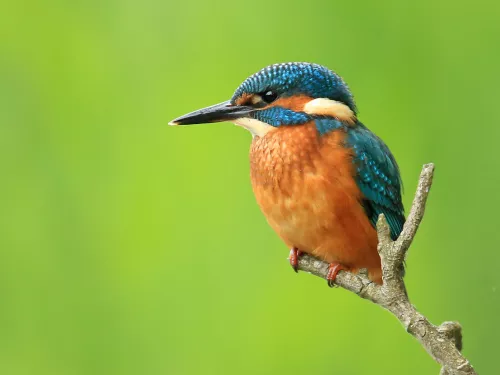
Blink and you may miss the fantastic kingfisher! This beautiful bird is easy to recognise thanks to its bright blue and metallic copper colours. It darts along the riverbank or sits patiently on a low branch over the water waiting for its next meal to swim by.
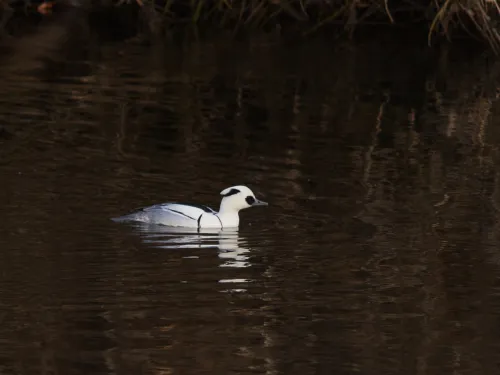
This small duck is an uncommon winter visitor to the UK, where they're usually found on lakes, reservoirs and gravel pits.
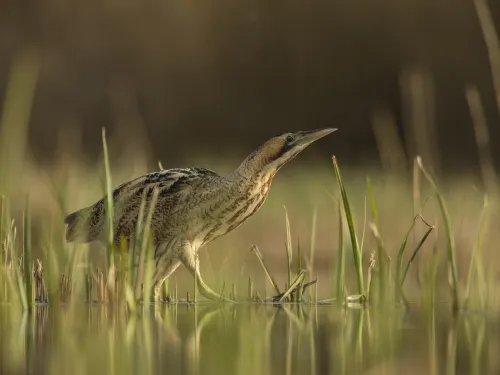
The shy and retiring bittern is a master of blending in and can be very difficult to spot in its reedbed home. It does sound like a booming foghorn, however, when it calls, so can often be heard if it cannot be seen.
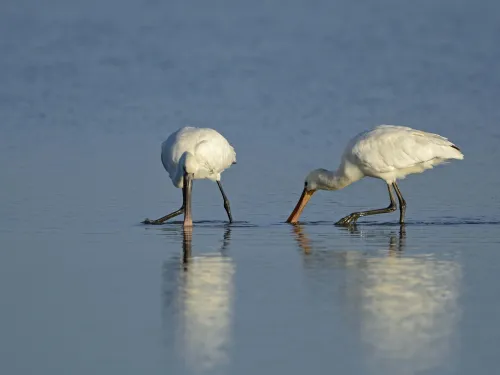
The distinctive sight of a spoonbill is becoming increasingly common in the east and southwest of England, with colonies of breeding birds now established.
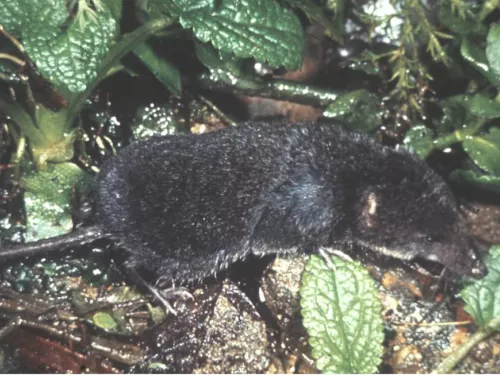
The large, dark grey water shrew lives mostly in wetland habitats. It's a good swimmer that hunts for aquatic insects and burrows into the banks.
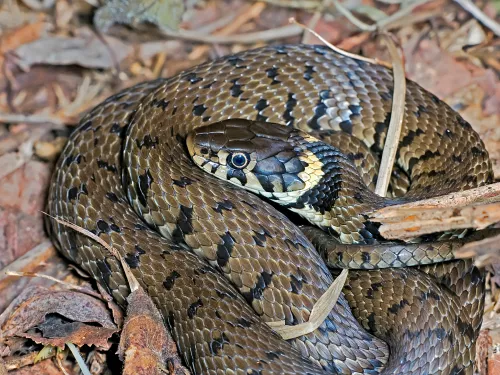
The grass snake is our longest snake, but don't worry if you find one in the compost heap - it's harmless! Look out for this green and yellow beauty in grasslands and wetlands, too.
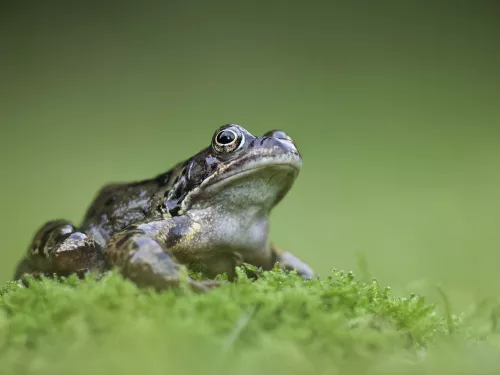
Our most well-known amphibian, the common frog is a regular visitor to garden ponds across the country, where they feast on slugs and snails. In winter, they hibernate in pond mud or under log piles.
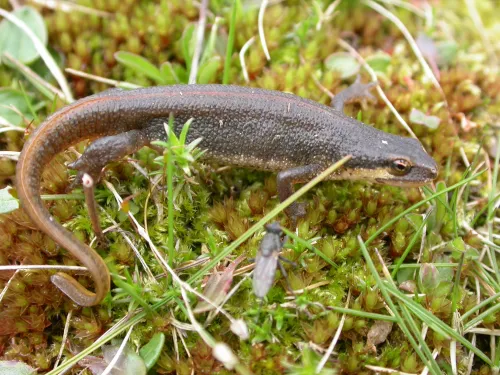
The palmate newt looks similar to the smooth newt, but favours shallow pools on acidic soils like heathlands. During the breeding season, males grow distinctive black webbing on their hind feet.
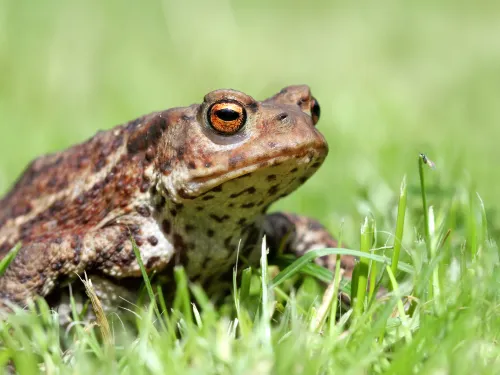
Despite its warts and ancient associations with witches, the common toad is a gardener's friend, sucking up slugs and snails. It is famous for migrating en masse to its breeding ponds.
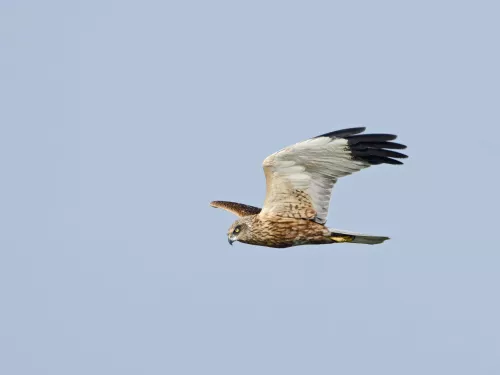
The courtship of the marsh harrier is certainly a sight to behold - wheeling and tumbling through the sky, male and female partners lock talons in mid-air. Look out for this rare bird over reedbeds in East Anglia, Somerset and the South East.
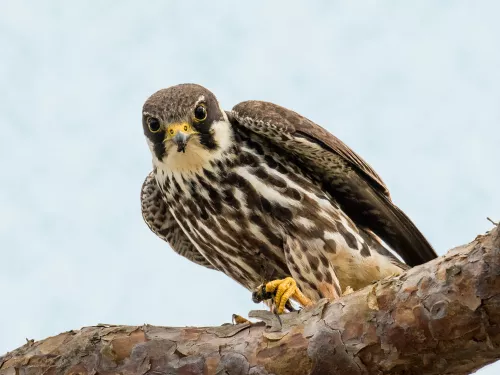
Look out for the swift-like shape of the hobby as it darts over heathlands and wetlands in summer. They are keen hunters, chasing and catching fast-flying dragonflies and small birds on the wing.
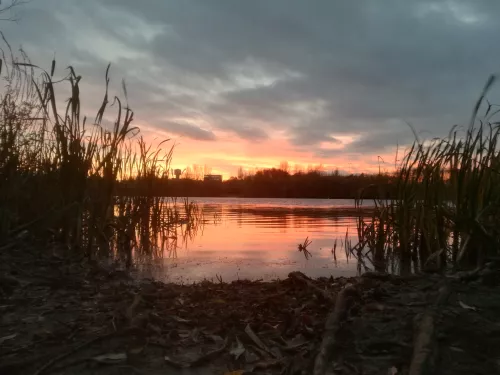
Conningbrook Lakes is made up of a series of lakes, ponds, river, wet woodland and grasslands – creating a great place for a riverside stroll, and host to a variety of wildlife.
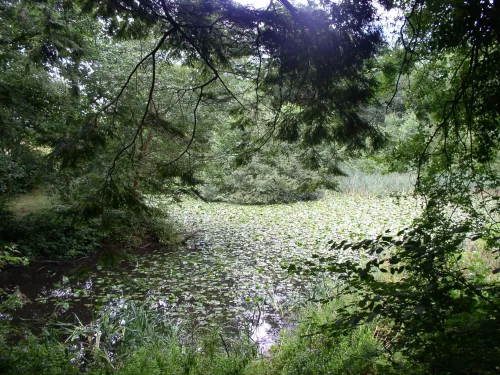
A small woodland reserve centred around a lake
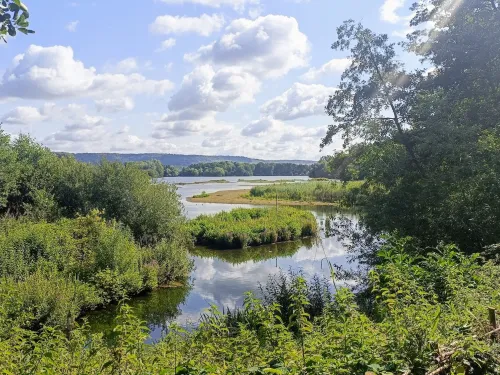
Welcome back to the refurbished Harrison Visitor Centre! This 73 hectare site was the first example of a gravel pit site being developed for the purpose of nature conservation. It is home to a diverse range of plants, fungi, birds and dragonflies & damselflies.