
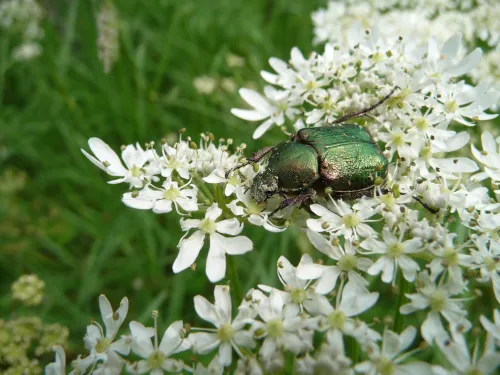
Noble chafer
The Noble chafer is a rare and beautiful metallic-green beetle that can be found in traditional orchards. It is on the wing over summer, feeding on umbellifers. The larvae live in the decaying wood of old trees.

A visit to a traditional orchard reveals gnarled old trunks of fruit and nut trees bursting with blossoms and young leaves in springtime, with wildflowers and insects populating summer’s long grass, and foraging wildlife attracted by autumn’s fallen fruit.
Traditional orchards, although essentially a crop, can provide remarkable havens for wildlife. While modern orchards are planted with rows of low-growing, closely planted trees and short grassland, trees in traditional orchards were planted at low densities, were grazed with livestock and cut for hay under the wide canopy. Individual trees are long-lived and managed, and the ground layer is lightly used and free of chemicals.
The result is orchard grassland that often includes abundant wildflowers, and trees with veteran features, including rot holes, split bark and hollow trunks – beneficial for fungi and invertebrates – that may be subtly coloured with a range of lichens.
Orchards were planted with domestic apple trees and other fruit and nut trees from Roman times onwards, and became a well-established feature of most farms in apple-growing country. The apples and the cider produced formed part of farm-worked wages. The rise of cheap supermarket imports and a drive toward intensification saw the demise of many orchards from the 1950s onwards, but more recently this trend is reversing, with rising appreciation for local apple varieties, and for the social role of orchards as community projects.
There are particular concentrations in Herefordshire, Worcestershire, Gloucestershire, Somerset and Kent.
Look for the evergreen mistletoe, particularly during winter when the rest of the orchard is bare. A parasitic plant with much folklore attached to it, mistletoe supports its own invertebrate fauna including the mistletoe marble moth. Birds can include lesser spotted woodpecker, bullfinch, redstart and, in winter, fieldfare and redwing, while night time visits might reveal badgers and hedgehogs. For apple lovers, there are over two thousand different varieties of apple and 500 varieties of pear to spot.
Sensitive management includes careful pruning, allowing existing trees to age and planting replacements to ensure continuity.
The Noble chafer is a rare and beautiful metallic-green beetle that can be found in traditional orchards. It is on the wing over summer, feeding on umbellifers. The larvae live in the decaying wood of old trees.
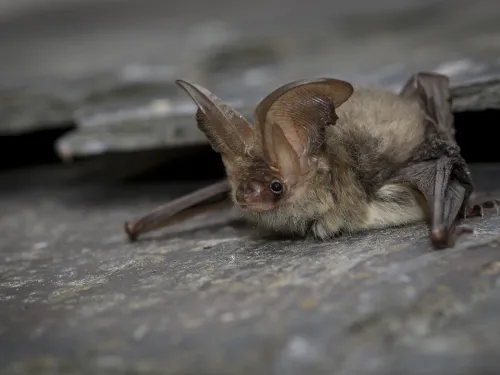
The brown long-eared bat certainly lives up to its name: its ears are nearly as long as its body! Look out for it feeding along hedgerows, and in gardens and woodland.
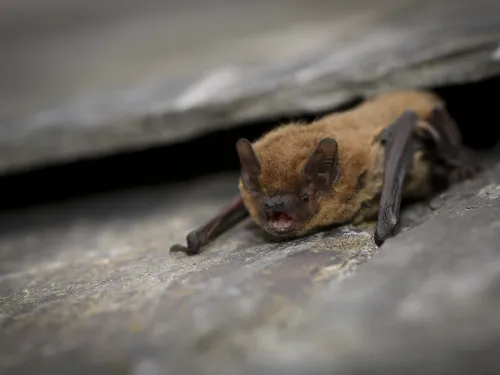
The common pipistrelle is so small, it can fit into a matchbox! Despite its size, it can easily eat 3,000 insects a night: look for it flitting around the garden or a lit lamp post as it chases its prey.
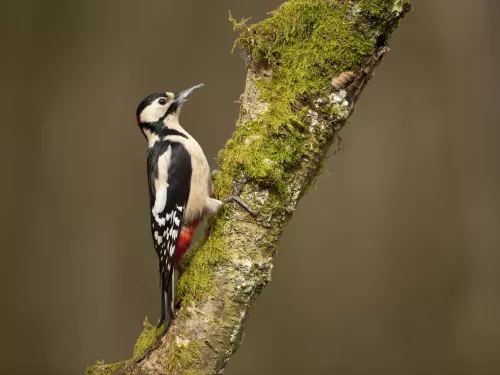
The 'drumming' of a great spotted woodpecker is a familiar sound of our woodlands, parks and gardens. It is a form of communication and is mostly used to mark territories and to display in spring.
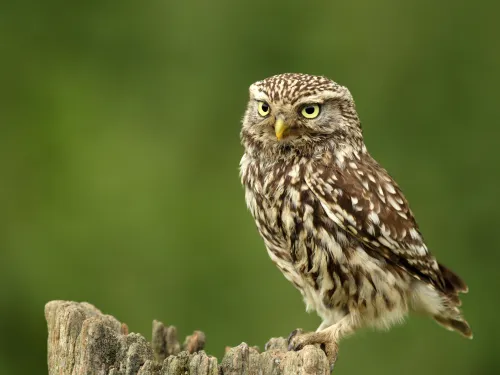
Introduced into the UK in the 19th century, the diminutive little owl can now be seen along hedgerows, on farmland and in parkland across England and Wales. It often perches on a pole or rock, looking out for its unsuspecting prey.
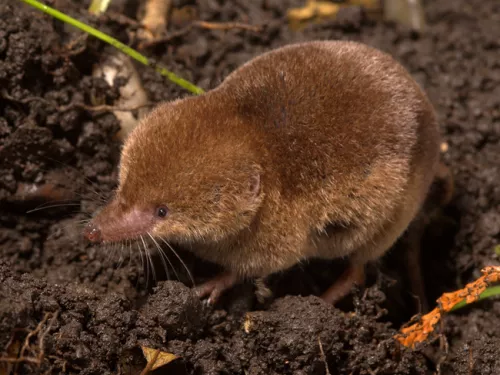
The diminutive common shrew has a distinctively pointy nose and tiny eyes. It lives life in the fast lane, eating every 2-3 hours to survive, and only living for a year or so. Look out for it in the garden.
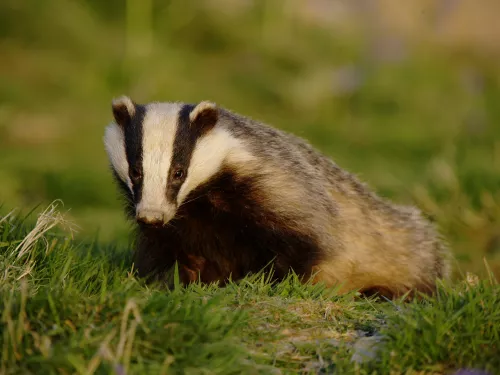
Badgers are the UK’s largest land predator and are one of the most well-known British species. They are famed for their black and white stripes and sturdy body, using their strong front paws to dig for food and to perfect their hobbit-like burrows, called ‘setts’.
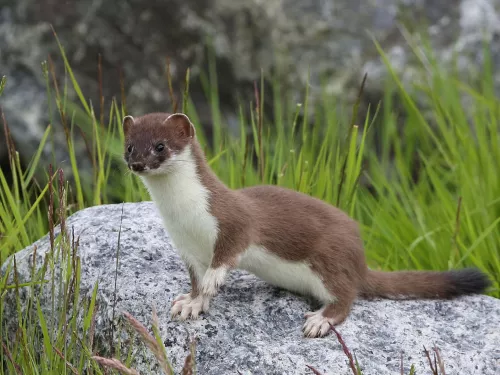
The stoat is a small mustelid, related to the weasel and otter. It has an orange body, black-tipped tail and distinctive bounding gait. Spot it on grassland, heaths and in woodlands across the UK.
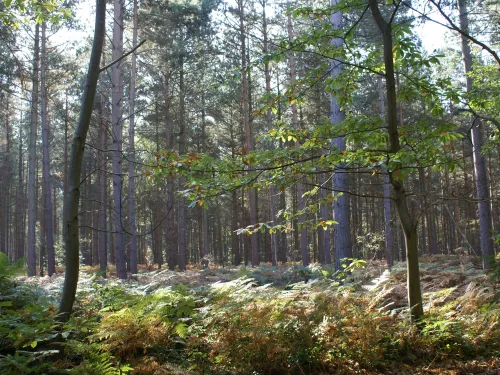
Ancient Woodland with large areas undergoing restoration from more modern commercial forestry.
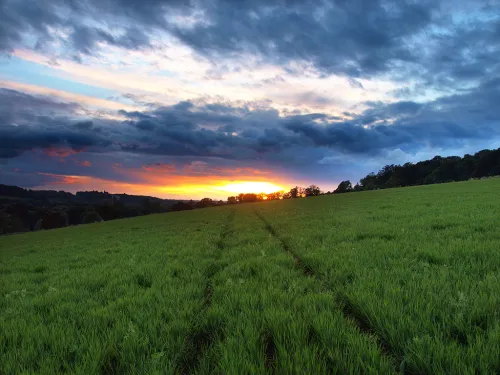
This remote and tranquil reserve comprises woodland, nesting within an area of pasture and orchard.