
Stone curlew
Stone curlews are unusual waders with large yellow eyes - perfect for hunting beetles at night.

Most arable fields are large, featureless monocultures devoid of wildlife, but here and there are smaller fields and tucked away corners that are farmed less intensively, or are managed specifically with wildlife in mind.
Arable land is cultivated to provide annual crops such as wheat, sugar beet, potatoes and beans. Under traditional agricultural management, arable fields supported a wide range of ‘arable weeds’ such as poppies, fluellens, corn marigold, and corncockle. Many of the plants we now cherish are ancient introductions that arrived with seed when agricultural culture spread across Europe and into Britain, some potentially as far back as the Neolithic age.
Changing practices and intensification of farming mean that few fields outside of nature reserves support farmland birds and plants in the high numbers they used to. Invertebrates dependent on disturbed ground are found in arable fields, but are susceptible to agro-chemicals, and areas with seeds left behind after harvest can support seed-eating birds.
Regularly disturbed, arable land supports species able to exploit the short-term, open conditions created by periodic ploughing and harvesting. Many of the plants are annual and able to flower and produce seed in a matter of weeks, the seeds lying dormant in the seed bank until conditions are suitable for germination. Some of these plants were once so common that they were considered to be pests, but now most are quite rare, some teetering on the brink of extinction. For example, the endangered corncockle has suffered from efficient seed-cleaning of crop seed before they have time to set seed.
Arable fields are abundant in the UK, particularly in the south and east of England, though those supporting a significant arable flora or farmland bird population are rare. Remaining hotspots include the chalk of south-east England and places such as the Hebrides where agriculture is less intensive.
Arable birds are declining, but look out for skylark, lapwing, corn bunting and yellowhammer. In particular areas or at known sites, you may see stone curlew, cirl bunting and Montagu’s harrier. In spring, while the vegetation is low, look out for brown hare loping across fields or ‘boxing’. Another mammal associated with this habitat is the harvest mouse, the UK’s smallest rodent.
Fields of poppies are easy to see from a distance; closer inspection is needed to find some of the less rare arable plants, including sharp-leaved and round-leaved fluellen, dwarf spurge, small toadflax, corn spurrey and field madder. Rarer species such as shepherd’s-needle, pheasant’s eye, and purple viper’s-bugloss are more easily seen on reserves.
In general, arable wildlife has suffered badly from pesticides and fertilisers, a move to autumn-sown cereals, and the loss of unkempt field corners and mixed arable and livestock farms. In the past, farms produced wildlife in abundance, as a by-product of farming operations, making farmland one of the most biodiverse habitats. The economic pressures encouraging the intensification of agriculture over the last 60 years have largely pushed out arable weeds, birds and other wildlife, and with the range of chemicals now available, farmers have the ability to remove almost all wild animals and plants.
Wildlife flower margins and set-aside land have allowed wildlife to persist where landowners have chosen to make space for them, generally with financial encouragement through agri-environment schemes. Measures such as ‘beetle banks’, ‘skylark plots’ and unsprayed conservation headlands have delayed the declines a little, but haven't been enough to reverse the trends, and the challenge of creating space for arable wildlife on land owned by a diversity of commercial farmers remains.
Stone curlews are unusual waders with large yellow eyes - perfect for hunting beetles at night.
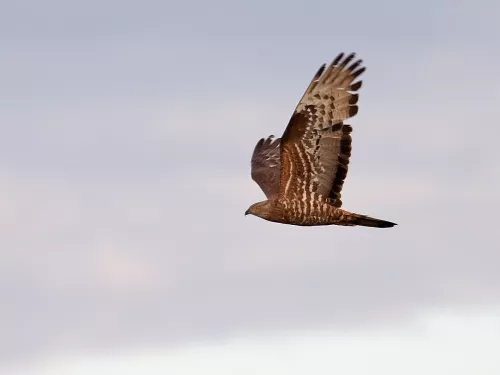
Rare summer visitors, honey buzzards breed in open woodland where they feed on the nests and larvae of bees and wasps.
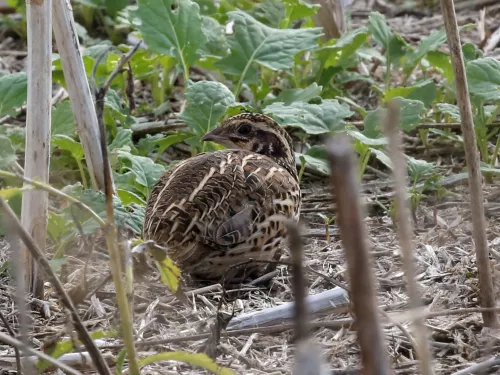
This tiny gamebird is rarely seen, but its distinctive "wet my lips" call can be heard ringing out over areas of farmland on summer evenings.
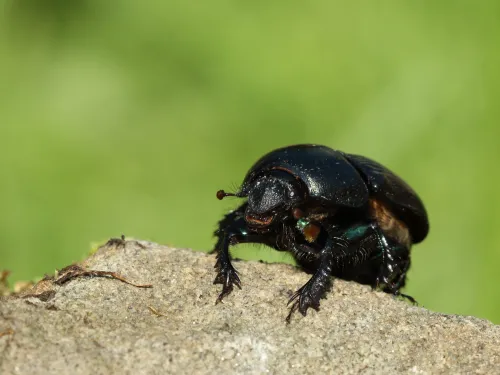
Dung beetles are an often overlooked but hugely important ecosystem engineer. Learn more about them and why we need them in our landscape.
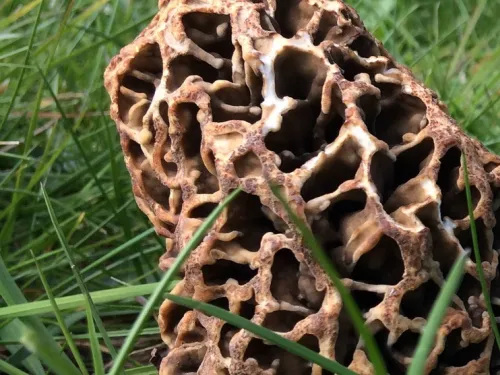
This unique fungus is one of the most sought after spring fungi of them all.
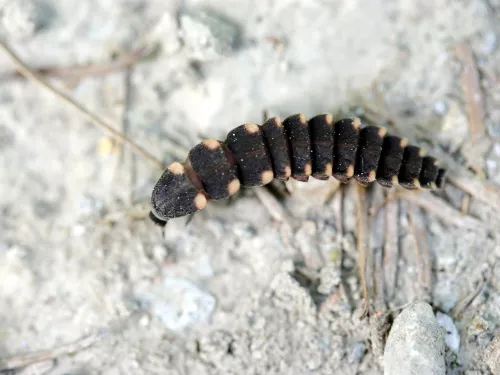
The glow-worm is not actually a worm, but a beetle. Males look like typical beetles, but the nightly glow of a female is unmistakeable - lighting up to attract a mate in the darkness of their grassland habitats. Look for the adults in summer.

Like many of our birds of prey, the peregrine falcon was so persecuted, numbers fell dramatically. Thankfully, this super-speedy flyer is now making a comeback, particularly in our towns, where it nests on tall buildings.
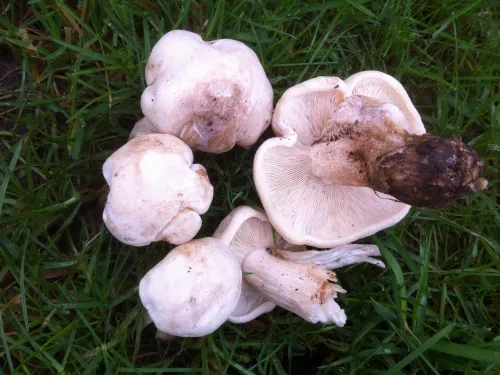
A lovely pale cream colour to begin with these stout mushrooms begin to turn a buff colour and the cap surface will crack as they age.
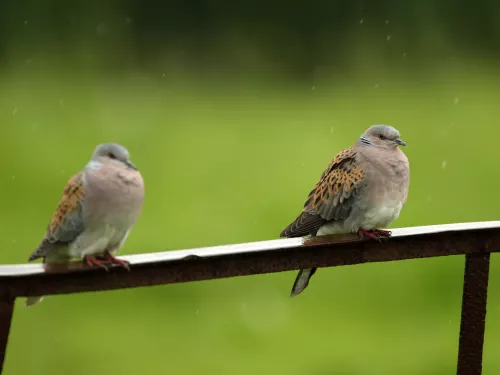
The turtle dove is the UK's fastest declining bird species and is on the brink of extinction. A small and pretty pigeon, it breeds in lowland England and winters in Sub-Saharan Africa.
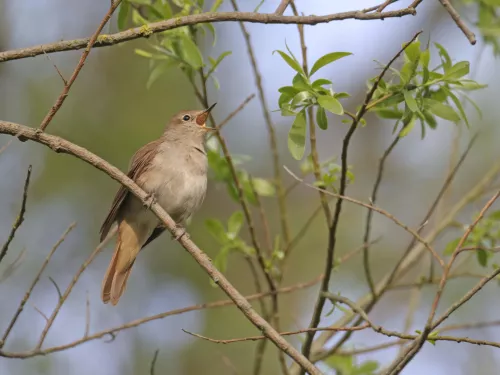
The melodious song of the nightingale is the most likely sign of this bird being about. Shy and secretive, it sings from dense scrub and woodland, day and night.
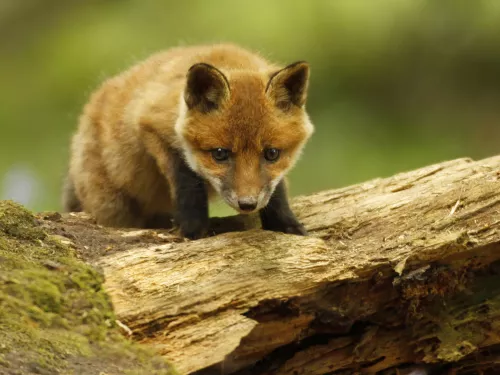
Famed for their cunning and stealth, these orangey-red dogs with their bushy tails can be seen in towns and the countryside. They come out mostly at night but can also be seen during the day if you’re lucky!

Fat hen is a persistent 'weed' of fields and gardens, verges and hedgerows. But, like many of our weed species, it is a good food source for birds and insects.
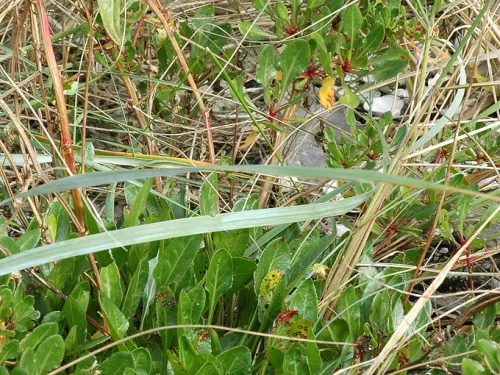
Sometimes called 'Wild spinach', Sea beet can be cooked and eaten. It grows wild on shingle beaches, cliffs and bare ground near to the sea, as well as in saltmarshes.
Sometimes called 'Wild spinach', Sea beet can be cooked and eaten. It grows wild on shingle beaches, cliffs and bare ground near to the sea, as well as in saltmarshes.
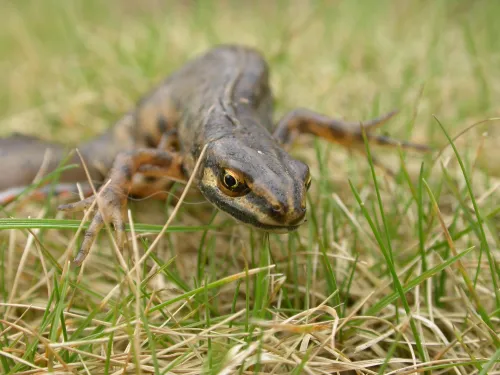
You are likely to spot the smooth newt in your garden or local pond. It breeds in water in summer and spends the rest of the year in grassland and woodland, hibernating over winter.
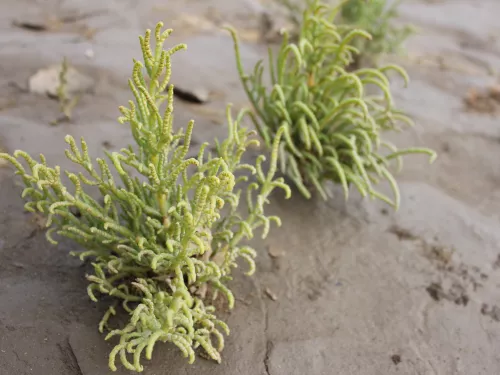
Sometimes called 'Marsh samphire', wild common glasswort is often gathered and eaten. It grows on saltmarshes and beaches, sometimes forming big, green, fleshy carpets.
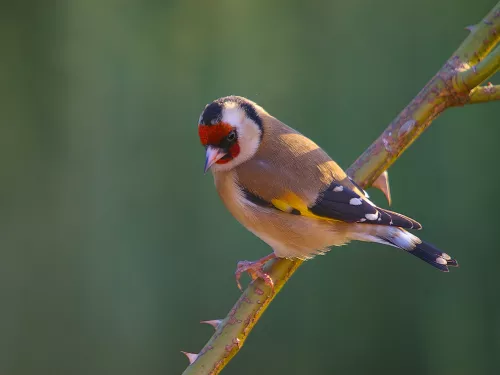
The striking red crown, golden back, and bright yellow wings of the goldfinch make it one of our prettiest garden birds. It happily visits birdtables and feeders across the UK.
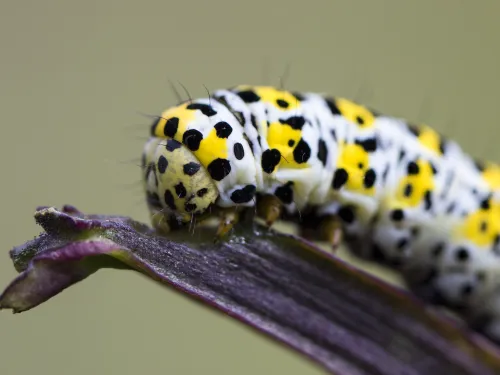
You're more likely to see the attractive, brightly coloured caterpillars than the mullein moth itself.
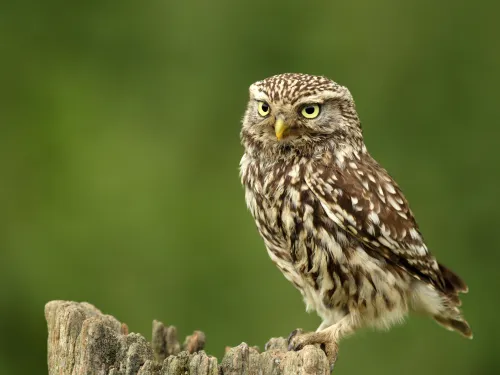
Introduced into the UK in the 19th century, the diminutive little owl can now be seen along hedgerows, on farmland and in parkland across England and Wales. It often perches on a pole or rock, looking out for its unsuspecting prey.
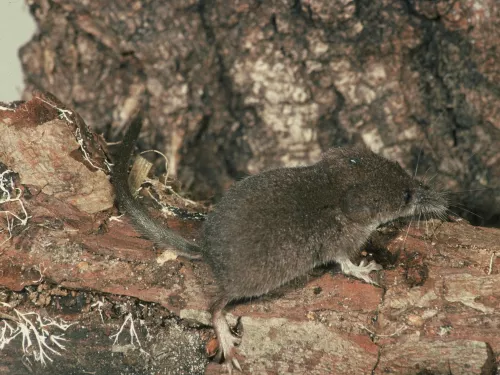
The diminutive pygmy shrew has a distinctively pointy nose and tiny eyes. It lives life in the fast lane, eating every 2-3 hours to survive, and only living for a year or so. Look out for it in the garden.
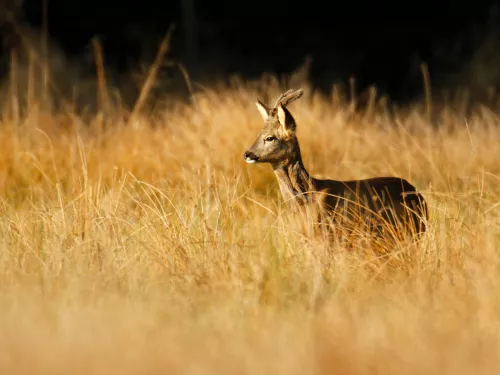
The attractive roe deer is native to the UK and widespread across woodland, farmland, grassland and heathland habitats. Look for its distinctive pale rump and short antlers.
The attractive roe deer is native to the UK and widespread across woodland, farmland, grassland and heathland habitats. Look for its distinctive pale rump and short antlers.
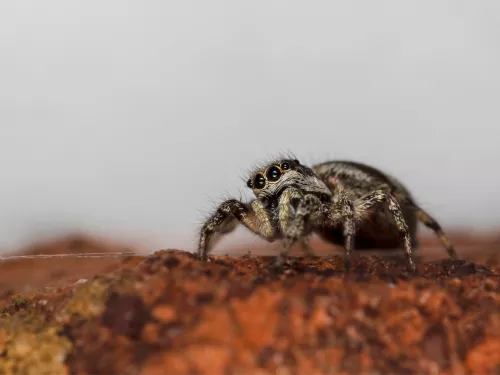
As its name suggests, the zebra spider has the familiar black-and-white stripes of a zebra, making it very distinctive. It can be found stalking its prey on rocks, trees and walls, particularly in gardens.
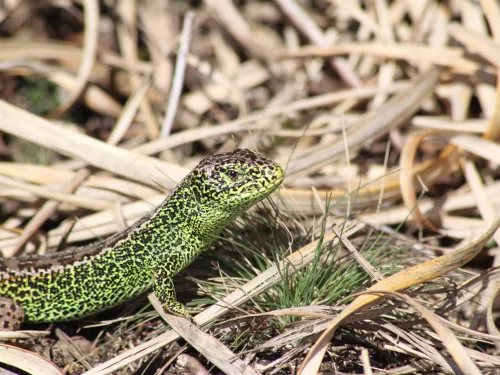
The sand lizard is extremely rare due to the loss of its sandy heath and dune habitats. Reintroduction programmes have helped establish new populations.

Listen out for the cat-like, 'kee-yaa' calls of the buzzard as it soars high over farmland and woodland. Once suffering from severe persecution and pesticide poisoning, it has made a stunning comeback to most of the UK.
The attractive roe deer is native to the UK and widespread across woodland, farmland, grassland and heathland habitats. Look for its distinctive pale rump and short antlers.
Introduced into the UK in the 19th century, the diminutive little owl can now be seen along hedgerows, on farmland and in parkland across England and Wales. It often perches on a pole or rock, looking out for its unsuspecting prey.
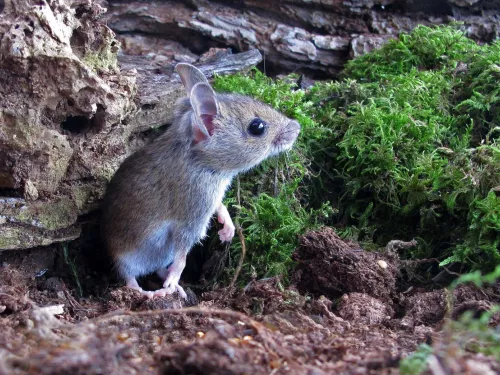
The tiny, brown wood mouse is one of our most common rodents and is very likely to be found in the garden. It is similar to the house mouse, but has larger ears and eyes relative to its size.
Fat hen is a persistent 'weed' of fields and gardens, verges and hedgerows. But, like many of our weed species, it is a good food source for birds and insects.
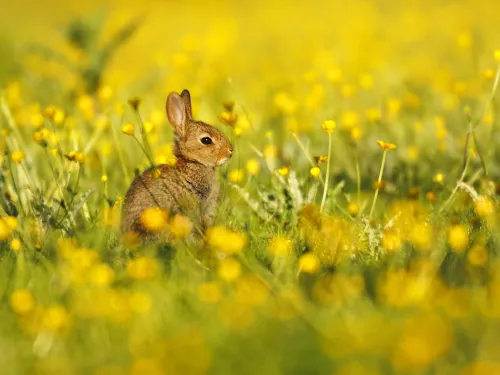
Who doesn’t love spotting rabbits hopping through long grass during a walk in the countryside? They are a common sight but it is always a treat to see their curious faces popping up, ears stood tall on the look out for predators.
Sometimes called 'Wild spinach', Sea beet can be cooked and eaten. It grows wild on shingle beaches, cliffs and bare ground near to the sea, as well as in saltmarshes.

Seeing a red kite soaring high in the sky is a true delight! Once a very rare bird, thanks to successful reintroduction projects these wonderful birds can now be seen in lots of places in the UK.
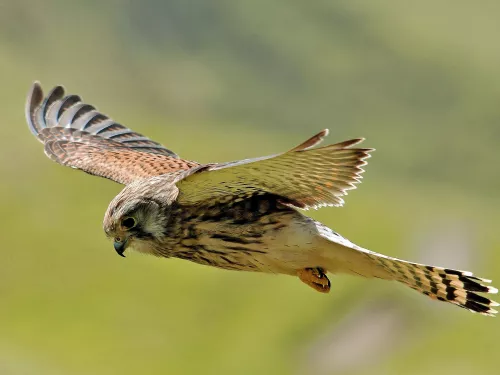
The kestrel is a familiar sight hovering over the side of the road, looking out for its favourite food: small mammals like field voles. It prefers open habitats like grassland, farmland and heathland, but can be seen in towns and villages.