
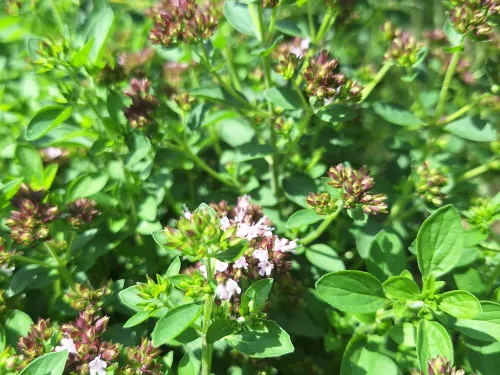
Wild marjoram
Wild marjoram is actually the same aromatic herb as oregano which is used in Mediterranean cooking. Its small, pink flower clusters can be seen on chalk and limestone grasslands in summer.

Whether they are tumbles of soft rock home to a variety of invertebrates, or hard, soaring rock faces bustling with huge seabird colonies, cliffs may be challenging to explore but are well worth the reward.
Coastal cliffs can be broadly classed as ‘hard’ or ‘soft’ cliffs. Hard cliffs are sheer faces of rock, plunging into the water from heights of over 300m, whereas soft cliffs are far more varied.
The inaccessibility of hard cliffs makes them safe nesting sites for seabirds, but they offer limited potential for plants to gain a foothold. On lower cliff faces near the water, lichens are the only plant life able to withstand sea spray and occasional drenching. Further up, away from the waves, cliffs are dotted with pockets of salt-tolerant plants such as rock samphire and thrift. At the top, where the slope is gentler and less severely exposed, maritime grassland occurs, with red fescue and sea carrot, or heath.
Soft cliffs are far more chaotic. Older cliffs support grassland, marshy patches and scrub, while more recently-formed ones house some plants. These plants live on a mix of bare ground and areas covered in slow-flowing water that seeps through from the land (‘seepages’), forming swamps, standing water, and even reedbeds in some areas. Soft surfaces here are perfect for burrowing creatures, are rich in invertebrates, and support a wide range of plant life.
Cliffs are a natural feature created through the erosion of coastal rocks by wind and water. The stability and slope of the cliff are strongly influenced by the degree of exposure to wind and salt spray and the type of rock.
Hard cliffs formed from granite, sandstone, basalt or limestone (including chalk) tend to have the most steep drops, while softer shales, mudstones, limestone and sandstone are more vulnerable to erosion and tend to slump over.
In soft cliffs, the mix of temperatures, availability of soft crumbly and chalky materials for burrowing, wetter areas and plenty of nectar sources mean they can provide for many different invertebrate species and their life stages – there are 29 species thought to be restricted to soft cliffs in the UK.
Hard cliffs are widely distributed around our shores, particularly in more exposed areas and in the south-west and south-east of England. Soft cliffs are more limited in distribution and are found mostly on the east and central south coasts of England, north-west and south-west Wales, and Cardigan Bay. Fife and Skye in Scotland also have examples of soft cliffs, as does Antrim, Northern Ireland.
The range of microhabitats supported by soft cliffs are excellent for invertebrates including mining bees, solitary wasps, rove beetles, tiger beetles and butterflies, including blues, skippers and the rare Glanville Fritillary. It is also worth looking out for migrant birds in scrubby patches, and burrowing sand martins. Bare ground suits 'pioneer' plants such as coltsfoot and the very rare slender centaury; damp flushes can be ideal for orchids. Keep an eye out for fossils in recent falls.
Hard cliffs are best known for their internationally important seabird populations – eight million seabirds breed around our coastline. Look for guillemot, razorbill and kittiwake on bare ledges, and the bulky untidy nests of cormorant and shag. Gulls and fulmar tend to be more scattered. Where there are no rats (usually on islands), puffins can be seen on cliff slopes and, at night, the eerie calls of manx shearwaters can be heard. Chough breed in some sea caves and their playful aerial antics can be admired from cliff tops.
Unlike most UK habitats, a non-intervention approach to cliff conservation is usually best. Natural processes are crucial in shaping the habitat, and in the case of soft cliffs, in continually re-setting the growth of plant life, allowing a rich range of flora and fauna to co-exist. Intensive land use nearby (including cultivation and development such as caravan parks) and sea defences can disrupt the natural process of erosion. At some seabird colonies, recreational activities need to be managed to prevent disturbance during the breeding season.
Wild marjoram is actually the same aromatic herb as oregano which is used in Mediterranean cooking. Its small, pink flower clusters can be seen on chalk and limestone grasslands in summer.
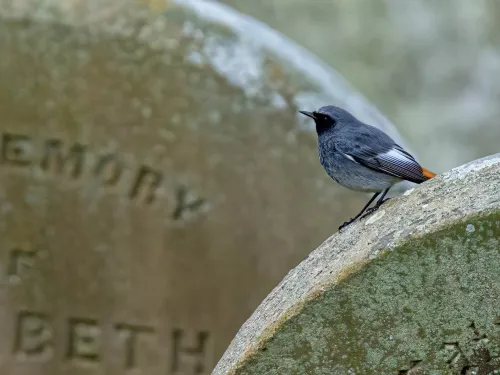
A rare breeder in the UK, this sooty-coloured bird is as at home on an industrial site as it is on a rocky cliff face.
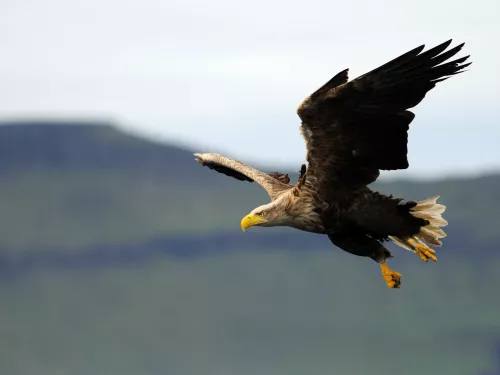
The huge white-tailed eagle is our largest bird of prey. Persecuted to extinction in the UK, it has been successfully reintroduced in Scotland. Look for it on the Isle of Mull and off the west coast of Scotland.
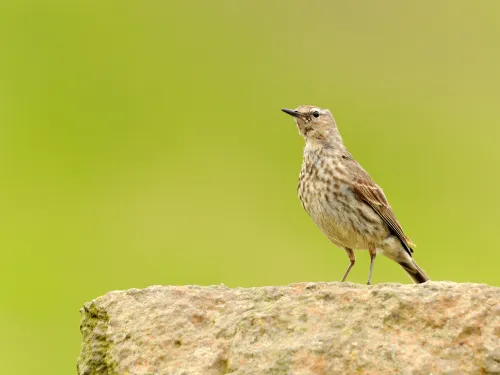
A common and stocky bird of our rocky coasts, the rock pipit can nearly always be seen close to the sea. It is a bit smaller than a starling.
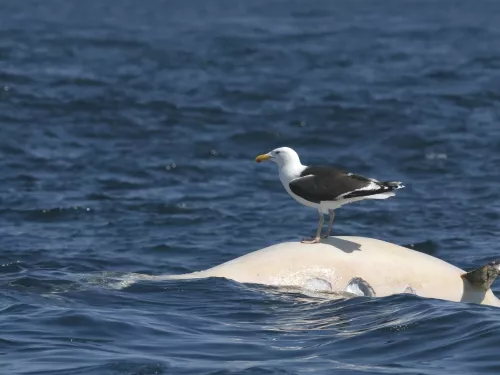
This huge gull can be seen around most of the UK's coasts in summer, with some venturing inland in winter.
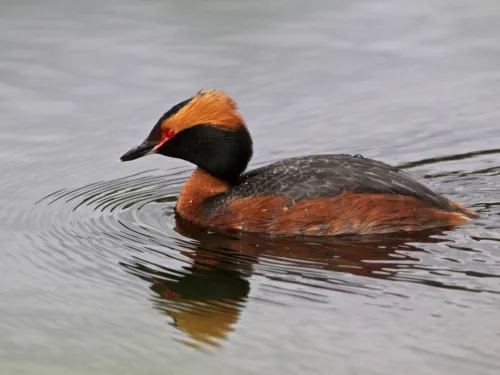
The rare Slavonian grebe is an attractive diving bird with distinctive, golden ear tufts that give rise to its American name - 'horned grebe'.
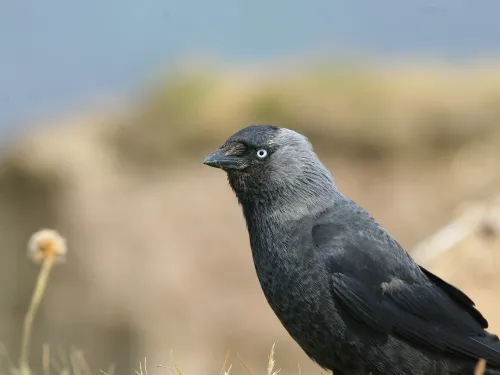
The jackdaw is a small, black-capped crow of woodlands, parks, towns and coast. It is a well-known thief, stealing other birds' eggs and breaking into garden feeders.
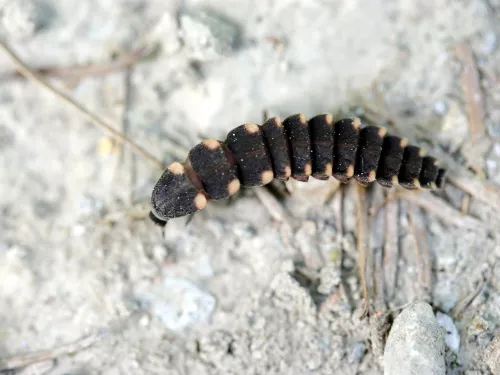
The glow-worm is not actually a worm, but a beetle. Males look like typical beetles, but the nightly glow of a female is unmistakeable - lighting up to attract a mate in the darkness of their grassland habitats. Look for the adults in summer.
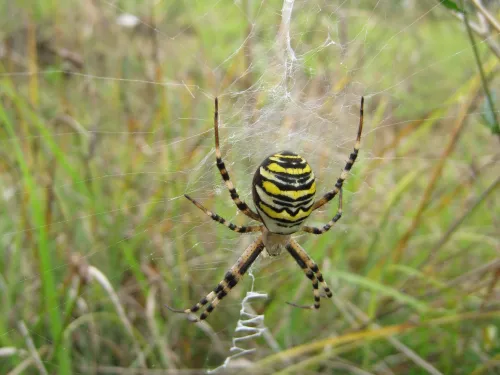
The wasp spider is a great mimic - looking just like a common wasp keeps it safe from predators, even though it is not dangerous itself. It can be found in southern England, but is spreading north.
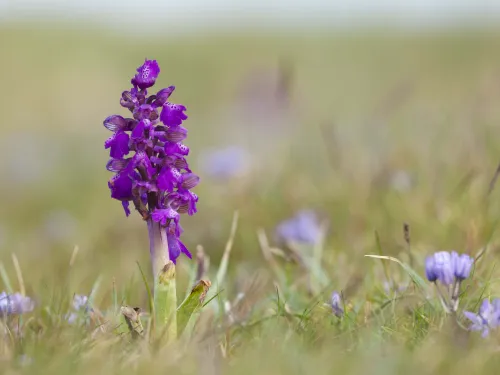
A short, but pretty plant of unimproved grasslands, the Green-winged orchid gets its name from the green veins in the 'hood' of its flowers. Look for it in May and June.
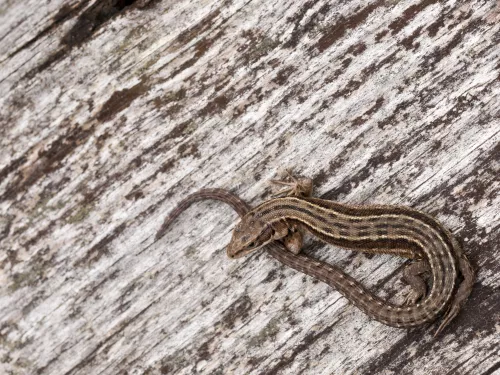
Look out for a common lizard basking in the warm sun as you wander around heathlands, moorlands and grasslands. You might even be lucky enough to spot one in your garden, too!
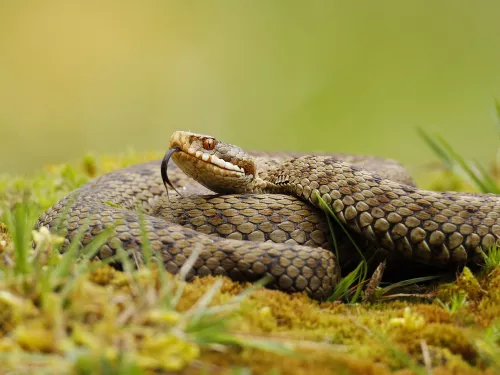
Our only venomous snake, the shy adder can be spotted basking in the sunshine in woodland glades and on heathlands.
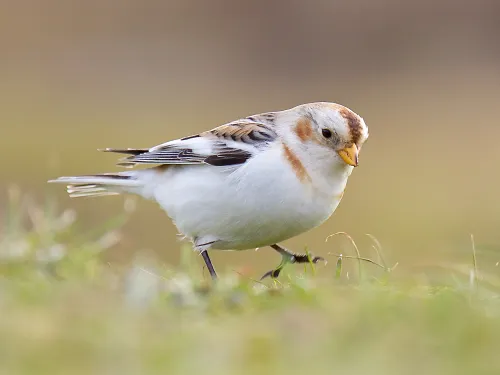
Only a few pairs of snow bunting breed here, so look out for this striking black-and-white bird in winter around Scotland, the North West and the East coast of England.
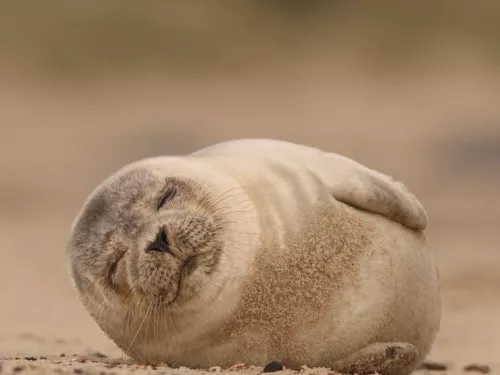
The smaller of our two UK seal species, common seals are also known as harbour seals. Despite being called "Common", they are actually less common than grey seals!
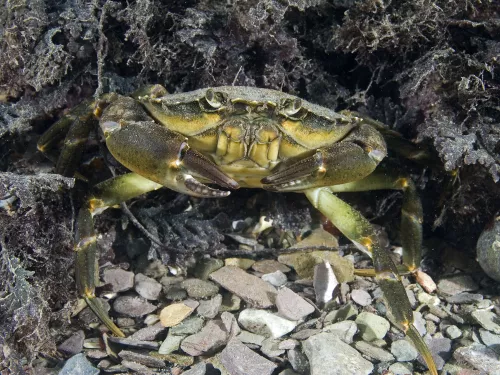
This crab is common around all of the UK. If you've ever been rockpooling or crabbing, it's probably the shore crab that you've met.
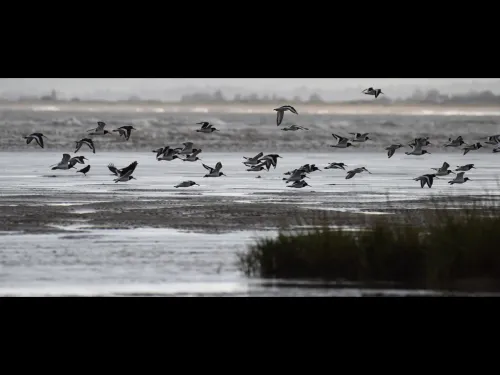
Listen to the rolling waves on the sand and shingle, breathe in the saline scents of the saltmarsh, and watch the wonderful wildlife this very important and sensitive National Nature Reserve has to offer.
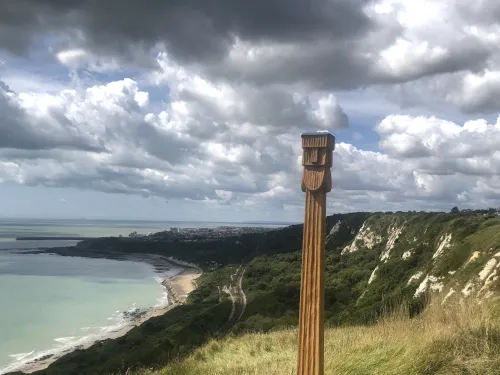
Overlooking the English channel, the Capel-le-Fern reserve has great views of the chalk cliffs that gives the White Cliffs of Dover its name.
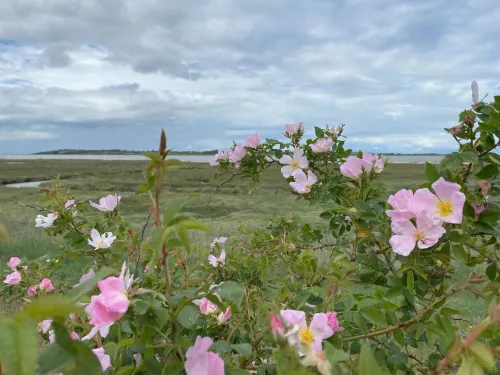
In the winter, South Swale welcomes migrating birds such as brent geese, turnstones, dunlin, avocets, osytercatchers and ringed plovers. In the summer, it's home to carpets of flowers which attract butterflies and some rare bee species!
Listen to the rolling waves on the sand and shingle, breathe in the saline scents of the saltmarsh, and watch the wonderful wildlife this very important and sensitive National Nature Reserve has to offer.